Charlotte County Dog Registration Information
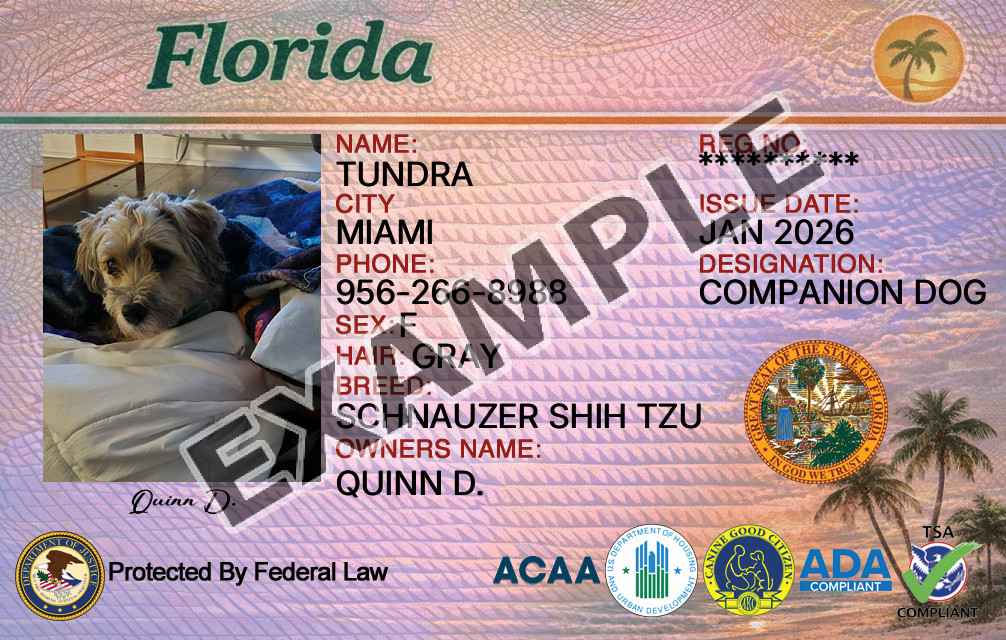
Service Dogs and Emotional Support Animals in Charlotte, Florida
If you’re searching where do I register my dog in Charlotte County, Florida for my service dog or emotional support dog, the key point is that “registration” usually means two different things: (1) the local dog license in Charlotte County, Florida (a county-issued license tag tied to rabies vaccination) and (2) the separate legal rules for service dogs or emotional support animals (ESAs). In Charlotte County, pet licensing is handled through official county offices, with Animal Control setting licensing requirements and Tax Collector offices offering in-person purchases.
- A service dog is not “made official” by a universal government registry. Your dog’s legal status comes from training and how the dog performs disability-related tasks (and the rules that apply in public places).
- An emotional support animal also is not registered through one universal federal registry; ESAs are generally related to specific housing or travel contexts and documentation, not a county “service animal registration.”
- Separately, many pets (including dogs) need a county license tag and proof of rabies vaccination. Even if your dog is a service dog or ESA, you may still need to follow local licensing requirements.
Where to Register or License Your Dog in Charlotte County, Florida
The offices below are the best official starting points for animal control dog license Charlotte County, Florida questions and for purchasing a county license tag in person.
Charlotte County Animal Control (Public Safety Department)
Use this office for licensing rules, ordinance questions, replacement tag guidance, and general animal services questions in unincorporated Charlotte County and across the county.
Charlotte County Tax Collector’s Office (Main Contact for In-Person Tag Purchases)
In-person office locations that can sell county pet license tags
| Location | Address | Hours |
|---|---|---|
| Punta Gorda |
410 Taylor Street
Punta Gorda, FL 33950
|
Monday–Friday, 8:00 AM–5:00 PM |
| Englewood |
6868 San Casa Drive
Englewood, FL 34224
|
Mon, Tue, Thu, Fri: 8:00 AM–5:00 PM; Wed: 8:30 AM–5:00 PM |
| Murdock (Port Charlotte) |
18500 Murdock Circle
Port Charlotte, FL 33948
|
Mon, Tue, Thu, Fri: 8:00 AM–5:00 PM; Wed: 8:30 AM–5:00 PM |
| Port Charlotte |
21229 Olean Boulevard
Port Charlotte, FL 33952
|
Monday–Friday, 8:30 AM–5:30 PM |
These Tax Collector locations offer in-person purchases for animal licensing; bring your rabies certificate and any spay/neuter documentation if applicable. If you are unsure which office is closest, call the main number to confirm services and any temporary closures before you go.
Overview of Dog Licensing in Charlotte County, Florida
What “registering your dog” usually means locally
In everyday terms, “registering” a dog in Charlotte County typically means getting a county license tag (sometimes called a pet license or county tag). This is separate from microchipping, training certificates, or any documents you might have for a service dog or emotional support animal.
Countywide licensing tied to rabies vaccination
Charlotte County’s licensing approach is closely tied to rabies vaccination compliance. You generally need a current rabies certificate from a licensed veterinarian to obtain a tag. Even if a rabies vaccine is valid for multiple years, the county license tag is commonly renewed on a yearly cycle.
Municipal differences inside Charlotte County
Many residents are served through countywide Animal Control and county licensing, but rules can vary by municipality for topics such as leashes, nuisance issues, and local enforcement priorities. If you live inside a city/town boundary (for example, within Punta Gorda city limits versus an unincorporated area), confirm whether any additional local rules apply. For licensing and tags, start with Charlotte County Animal Control and the Charlotte County Tax Collector locations listed above.
What You Need Before Registering a Dog
Common documents and details
To meet dog licensing requirements Charlotte County, Florida, you’ll typically want to gather these items before visiting an office or submitting a request:
- Rabies vaccination certificate showing your dog is current (from a licensed veterinarian)
- Spay/neuter certificate (if your dog is altered and fees differ)
- Your contact information (owner name, phone, and address where the dog resides)
- Dog details such as name, breed, color/markings, age (helpful for accurate records)
- Payment method accepted by the office you visit
Why rabies proof matters
Local government dog licensing is commonly used to encourage rabies vaccination compliance and to help Animal Control return found pets to owners. In practice, having up-to-date rabies documentation is usually the single most important step to complete before you request a county license tag.
Steps to Register or License a Dog in Charlotte County, Florida
Step 1: Confirm your dog’s rabies vaccination is current
If your dog is not current on rabies vaccination, schedule that first with a licensed veterinarian and keep the certificate. Most local licensing processes depend on that certificate.
Step 2: Choose your licensing method
Residents typically have a few official ways to obtain a county tag:
- In person: Purchase at a Charlotte County Tax Collector office location listed above.
- By mail: If you need a mail-in option, contact Charlotte County Animal Control to confirm the current mailing steps, required documents, and acceptable payment.
Step 3: Bring your documents and complete the transaction
When you arrive, provide the rabies certificate and any supporting documents (such as spay/neuter proof). You should receive a license tag and/or receipt based on the county’s current process.
Step 4: Attach the tag and keep records
Put the tag on your dog’s collar and keep a copy (digital or paper) of your rabies certificate and license receipt. This helps if your dog gets lost or if you need to renew.
Service Dog Laws in Charlotte County, Florida
Service dog status is based on function and training, not a county “service dog registration”
A service dog is generally understood as a dog trained to perform specific tasks for a person with a disability. There is no single universal federal “service dog registry” that makes a dog official everywhere. In day-to-day life, what matters is whether the dog is trained to perform disability-related tasks and whether the handler meets the applicable legal definition in the setting (public access, housing, etc.).
Do service dogs still need a county license tag?
In many places, service dogs still follow the same baseline local public-health rules as other dogs—especially rabies vaccination and local licensing. If you’re unsure how Charlotte County applies licensing fees or exemptions (if any), the most reliable approach is to call Charlotte County Animal Control using the contact information above and ask specifically about licensing for service dogs and what paperwork they need.
Emotional Support Animal Rules in Charlotte County, Florida
What an emotional support animal (ESA) is—and is not
An emotional support animal is generally a companion animal that provides comfort to someone with a disability-related need. ESAs are not the same as trained service dogs for public-access purposes. As with service dogs, there is not one universal federal government registry where you “register” an ESA for Charlotte County or for the United States as a whole.
Local licensing is separate from ESA documentation
Even if your dog is an ESA, local rabies vaccination rules and where to register a dog in Charlotte County, Florida for licensing purposes typically stays the same: obtain a county license tag through the official offices listed above. For any housing-related questions about ESAs, you’ll usually be dealing with your housing provider’s process and the relevant fair-housing rules—separate from county pet licensing.
Comparison: Dog License vs. Service Dog vs. Emotional Support Animal
If you’re trying to figure out what you actually need in Charlotte County, this table helps separate the three concepts.
| Category | What it means | Typical proof or documentation | Where you handle it in Charlotte County |
|---|---|---|---|
| Dog license (county tag) | A local government license/tag for your dog (often tied to rabies vaccination and local ordinances). This is the main answer to “where do I register my dog in Charlotte County, Florida.” |
|
Charlotte County Animal Control (rules/questions) and Charlotte County Tax Collector offices (in-person purchases). |
| Service dog | A dog trained to perform tasks for a person with a disability. Legal status is based on training and function, not a universal registry. | Typically not a “registration.” In many settings, you may be asked limited questions about the dog’s tasks; training records may be helpful for personal documentation, but are not a universal government-issued credential. | For local licensing/rabies: same county licensing process as other dogs, unless the county confirms a specific exemption. For public-access rules: governed by applicable disability access laws rather than county licensing offices. |
| Emotional support animal (ESA) | An animal that provides emotional support or comfort for disability-related needs; generally not the same as a task-trained service dog for public access. | Often tied to housing-related documentation needs; not a universal federal registry. Requirements depend on the context (especially housing). | For local licensing/rabies: same county licensing process as other dogs. For housing: handled with your housing provider’s accommodation process. |
Frequently Asked Questions
What You May Need
-
Proof of rabies vaccinationRabies certificate from a licensed veterinarian.
-
Proof of residencyIf requested, confirm the address where your dog resides in Charlotte County.
-
IdentificationA government-issued ID can help with in-person transactions.
-
Spay or neuter documentation (if applicable)May affect the licensing fee category.
-
Payment for licensing feeCall ahead to confirm accepted payment types for your chosen office.
Disclaimer
Local laws, fees, office locations, and contact details can change. Residents should verify the most current information with their local animal services or licensing office in Charlotte County, Florida.
Register A Dog In Other Florida Counties
Select your county below to get started with your dog’s ID card. Requirements and license designs may vary by county, so choose your location to see the correct options and complete your pup’s registration.
- Alachua Dog License Cards
- Baker Dog License Cards
- Bay Dog License Cards
- Bradford Dog License Cards
- Brevard Dog License Cards
- Broward Dog License Cards
- Calhoun Dog License Cards
- Citrus Dog License Cards
- City of Jacksonville Dog License Cards
- Clay Dog License Cards
- Collier Dog License Cards
- Columbia Dog License Cards
- DeSoto Dog License Cards
- Dixie Dog License Cards
- Duval Dog License Cards
- Escambia Dog License Cards
- Flagler Dog License Cards
- Franklin Dog License Cards
- Gadsden Dog License Cards
- Gilchrist Dog License Cards
- Glades Dog License Cards
- Gulf Dog License Cards
- Hamilton Dog License Cards
- Hardee Dog License Cards
- Hendry Dog License Cards
- Hernando Dog License Cards
- Highlands Dog License Cards
- Hillsborough Dog License Cards
- Holmes Dog License Cards
- Indian River Dog License Cards
- Jackson Dog License Cards
- Jefferson Dog License Cards
- Lafayette Dog License Cards
- Lake Dog License Cards
- Lee Dog License Cards
- Leon Dog License Cards
- Levy Dog License Cards
- Liberty Dog License Cards
- Madison Dog License Cards
- Manatee Dog License Cards
- Marion Dog License Cards
- Martin Dog License Cards
- Miami-Dade Dog License Cards
- Monroe Dog License Cards
- Nassau Dog License Cards
- Okaloosa Dog License Cards
- Okeechobee Dog License Cards
- Orange Dog License Cards
- Osecola Dog License Cards
- Palm Beach Dog License Cards
- Pasco Dog License Cards
- Pinellas Dog License Cards
- Polk Dog License Cards
- Putnam Dog License Cards
- Santa Rosa Dog License Cards
- Sarasota Dog License Cards
- Seminole Dog License Cards
- St. Johns Dog License Cards
- St. Lucie Dog License Cards
- Sumter Dog License Cards
- Suwannee Dog License Cards
- Taylor Dog License Cards
- Union Dog License Cards
- Volusia Dog License Cards
- Wakulla Dog License Cards
- Walton Dog License Cards
- Washington Dog License Cards
